
collectionGrade.header.page_header
Recommended Topics:
collectionGrade.header.recommended
collectionGrade.sections.sect1_title
collectionGrade.sections.sect1_description

23 items
Me and My World: My Neighborhood

Grades PreK-2
Talk with Me!
Learn about your community and neighborhood. In this Toolkit, leaners explore different homes, shops, and people in your neighborhood and have fun with related activities.
Talk with Me Toolkits provide you with chances to talk with your children to improve thinking, vocabulary, and language development. Talking with your child is great—and research shows that the quality of words children hear matters more than how much you talk.
Talk with Me Toolkits give you ideas to begin conversations that are organized around a theme. The Toolkits feature videos, photographs, paintings, and artworks along with questions to talk about with your child. At the end of each toolkit there are more activities to do and books to read together. Go through this toolkit with your child and see how many topics there are to talk about!
This toolkit was adapted with a grant from the Institute for Museum and Library Services.
Links to third-party websites and videos are included in this Toolkit for informational purposes only. They do not indicate the Smithsonian’s endorsement, sponsorship of, or affiliation with the third party or content of the linked site, including any advertisements that might be posted.

22 items
Art: Colors, Shapes, Lines
Grades PreK-2
Talk with Me!
Learn about colors, shapes, lines with this toolkit and have fun with related activities.
Talk with Me Toolkits provide caregivers chances to talk with their children to improve thinking, vocabulary, and language development. Talking with your child is great—and research shows that the quality of words children hear matters more than how much you talk.
Talk with Me Toolkits give caregivers ideas to begin conversations that are organized around a theme. They feature videos, photographs, paintings, and artworks along with questions to talk about with your child. At the end of each toolkit there are more activities to do and books to read together. Go through this toolkit with your child and see how many topics there are to talk about!
This toolkit was adapted with a grant from the Institute for Museum and Library Services.
Links to third-party websites and videos are included in this toolkit for informational purposes only. They do not indicate the Smithsonian’s endorsement, sponsorship of, or affiliation with the third party or content of the linked site, including any advertisements that might be posted.

20 items
NATURE: Who Lives in the Trees?
Grades PreK-2
Talk with Me!
Having conversations with young children contributes to their thinking and language development. All conversations are good, but research shows that the quality of words children hear matters more than the quantity. Further, what’s best is an exchange; in other words, talk with children, not at them.
The Talk with Me Toolkits give parents and caregivers thematically organized high-quality, authentic materials to make children their conversational partners in discussions that matter. Each online toolkit features captivating videos and real-world photographs, as well as intriguing paintings and other artworks to observe and discuss through conversation prompts. Hands-on activities and books complete each toolkit. Simple instructions appear right in the toolkits, so you can jump right in. See what interests your child and get started. There’s a lot to talk about!
To read more, see, from the Harvard Graduate School of Education’s Usable Knowledge site, The Brain-Changing Power of Conversation.
collectionGrade.sections.sect2_title
collectionGrade.sections.sect2_description

24 items
Get To Know Alma Thomas

Grades 3-5
What inspires you? Get to know Alma Thomas, (b. Columbus, Georgia; lived and worked in Washington, DC, 1891–1978), an American artist and educator known for her signature painting style using bright colors and patterns inspired by nature. She became a full-time artist late in her life. Born in a time of horses and buggies, she lived through big advancements in technology, such as the space race and moon landing. Her art was inspired by the nature she saw outside her home studio, and awe for the exploration of our vast universe.
Get To Know Alma Thomas is part of the Hirshhorn KIDS About the Artist series. About the Artist biographies are designed for kids under age 12. Modern and contemporary artists' lives reflect recent human history and events. Sharing these life stories and artworks can help kids see their own potential and better understand the world and their place in it. It is our goal to inspire future generations of artists, makers, and creative problem solvers—sharing artists stories is one way Hirshhorn KIDS realize this goal.
Use it in the classroom to teach:
Art classroom: Color Theory, Pattern
Language Arts classroom: Biography
Social Studies classroom: 20th century
23 items
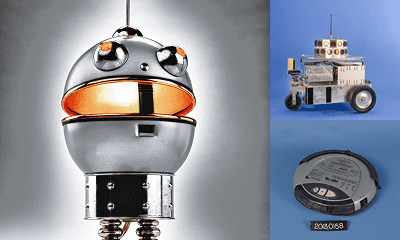
Activity Collection: ArtBots!
Grades 3-5
In this activity collection, you'll learn how to create your very own art-making robot--an ArtBot!
Special thanks to Lenovo
19 items
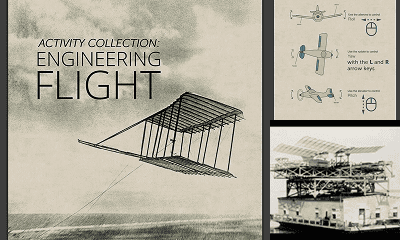
Engineering Flight
Grades 3-5
This is a master collection designed to be copied and adapted to your individual classroom needs. Included are three scalable student activities that teach students engineering skills using methods similar to those that made the Wright brothers pioneers of aviation. Feel free to pick and choose from the activities in creating your own collections:
1. The Four Forces of Flight
In this student activity, students will briefly go over the four forces of flight (lift, drag, weight, and thrust) and put them to the test in the Paper Airplane Challenge! This activity is suitable for Primary/Intermediate grade levels.
2. Engineering the Wright Way
The second student activity is an online interactive, "Engineering the Wright Way"*, where students will develop engineering skills to design and test all the different components of an airplane based on the the Wrights' methodology. Students can write down a save code generated in the interactive to store their progress and return to finish the activity later. This activity is suitable for Intermediate/Middle grade levels.
3. Take a Wright Flight
The third student activity is an online flight simulator to learn three controls of flight: yaw, pitch, and roll. The final segment is an online interactive** to test fly the original Wright Flyer in conditions similar to that cold December morning when the Wrights first achieved flight, using direct 3D scans of the original Wright Flyer made by the Smithsonian. This activity is suitable for all grades.
*The "Engineering the Wright Way" lesson plan and activity were created by the National Air and Space Museum, courtesy of the Alcoa Foundation.
**The Wright Brothers Flyer activity was created by the Smithsonian Office of Educational Technology
This is one of 5 activities used in the Lenovo Week of Service event.
collectionGrade.sections.sect3_title
collectionGrade.sections.sect3_description

34 items
Presidents and Precedents: The New Nation
Grades 6-8
In
this playlist you will learn about how three of the first presidents shaped the executive branch of the United States government.
Start by clicking on the first tile in the upper left hand corner. Then move through the playlist by clicking on the ">" symbol at the bottom of the page. Look for the information and paperclip icons to provide more information about selected resources. There are 34 tiles in this collection.

91 items
Day of the Dead Learning Kit
Grades 6-8
El Día de los Muertos or Day of the Dead is a celebration to honor and commemorate the cycle of life and the lives of the recently departed. This Pre-Columbian celebration has been observed in Mexico since before the arrival of the Spanish. Although many cultures see death as a cause for sadness rather than celebration, the cultures that observe el Día de los Muertos view death as a part of life. This is also a special celebration among some Native American and Mexican American communities in the United States.
The National Museum of the American Latino has created this resource as a guide to learn more about the Day of the Dead. Use this Learning Lab as a starting off point to celebrate with your community, family, and/or students. Our on-line learning kit includes general information and the history of the tradition. Smithsonian collections, video resources, music, and hands-on activities for in-school or at-home learning are also included.
This Learning Lab collection also includes links to a special exhibit and mural gallery on the Healing Uvalde Mural Project from Texas.

78 items
Exploring Identity through Portraiture
Grades 6-8
This Learning Lab complements the National Portrait Gallery's student program, Exploring Identity through Portraiture.
Exploring Identity through Portraiture explores the ways in which artists and sitters use portraiture as a means to convey individual, community/cultural, and national identity. By analyzing portraits, including self-portraits, students will consider how the artists tell the sitters’ stories, paying attention to how the artists’ choices reveal some—but perhaps not all—aspects of the sitters’ identity. Students will explore how portraiture can be an avenue that they can use to represent their own identities and make meaning of what is important to them.
Objectives
After completing this lesson, students will be better able to:
• Examine how modern and contemporary artists use portraiture to reveal aspects of a sitter’s individual, community/cultural, and national identity.
• Identify key components of a portrait and discuss what one can learn about the sitter through these components.
• Discuss the artistic choices that portrait artists make and consider how such decisions can reveal the artists’ viewpoints and also influence the viewers’ understanding of the sitters’ identity.
• Use the museum’s collection as a gateway to investigating and exploring one’s own individual, community/cultural, and national identity.
#NPGteach
collectionGrade.sections.sect4_title
collectionGrade.sections.sect4_description

33 items
The Great Migration and Black Migration
Grades 9-12
What can objects tell us about the experiences of African Americans as they migrated north in the period between 1900-1930? What about the experiences of global black migrants globally? How will this information help us to better understand the ways African American life changed in the early 20th century and how African Americans helped shape Northern cities and environments?
History is a study into the past, and how it informs the future, our communities and world, and ultimately ourselves. Learning History Through Objects (LHTO) is a series designed by the National Museum of African American History and Culture to empower students, primarily through the historical thinking skills of analysis and interpretation, to allow them to explore, question, and create history.
One of the important skills to be a historian is the ability to analyze and interpret a primary source to gain a better understanding of history. A primary source is any document, artifact, media, or image that was created by the historical person you are studying or during that time period.
The Learning History Through Object Series is based off the exhibit structure and objects within the permanent and temporary exhibitions at the National Museum of African American History and Culture and other Smithsonian units.
The analysis questions are taken from the National Archives and Records Administration Document Analysis Worksheets, unless stated otherwise.

6 items
Photography & Writing (Living Through History)

Grades 9-12
“Living Through History” is a cross-curricular Cornerstone that will allow students to document their experience during this global pandemic, with global competence in mind.
This activity set is intended for 8th - 12th grade students. The primary goals of this progression are to support students’:
- analytical skills, to the end of leveraging photography as a tool for communicating about moments in history;
- independent, small group, and whole group processing of the experience of the pandemic and social uprisings of current history;
- use of global competency thinking routine Truth and Beauty as a reflection tool;
- creation of images and texts to contribute to the city-wide virtual event, Living Through History: A Cornerstones Showcase.
In an effort to accommodate various teacher and student needs, including emotional support, multiple tracks and “choice points” are provided.
Keywords: COVID-19, SEL, Social Emotional Learning, History, ELA, DCPS

10 items
Invasive Species of the Chesapeake Bay

Grades 9-12
Invasive species are organisms that become established in a new location and cause harm. The Chesapeake Bay region is home to a number of terrestrial and aquatic invasive species. Explore this learning lab collection to learn more about invasive species in the Chesapeake Bay. Want to dive deeper? Learn more about the invasion of the northern snakehead in the Chesapeake Bay through a classroom activity. In this activity, you'll use genetic sequences to explore what they're eating in the Delaware Bay ecosystem. And explore different water quality parameters to understand more about the geography of where they are spreading.
